Stop Costly Downtime: How Premium NTC Sensors Lower Energy Storage Field Failure Rates
If you’re an energy‑storage OEM, you’ve definitely learned one expensive lesson in recent years: the smallest components often cause the biggest headaches. In 2026, global energy‑storage projects are chasing larger capacity, longer service life and zero‑failure field operation. While everyone obsesses over battery cells and BMS accuracy, humble NTC temperature sensors are frequently overlooked — until they start failing out in the field.
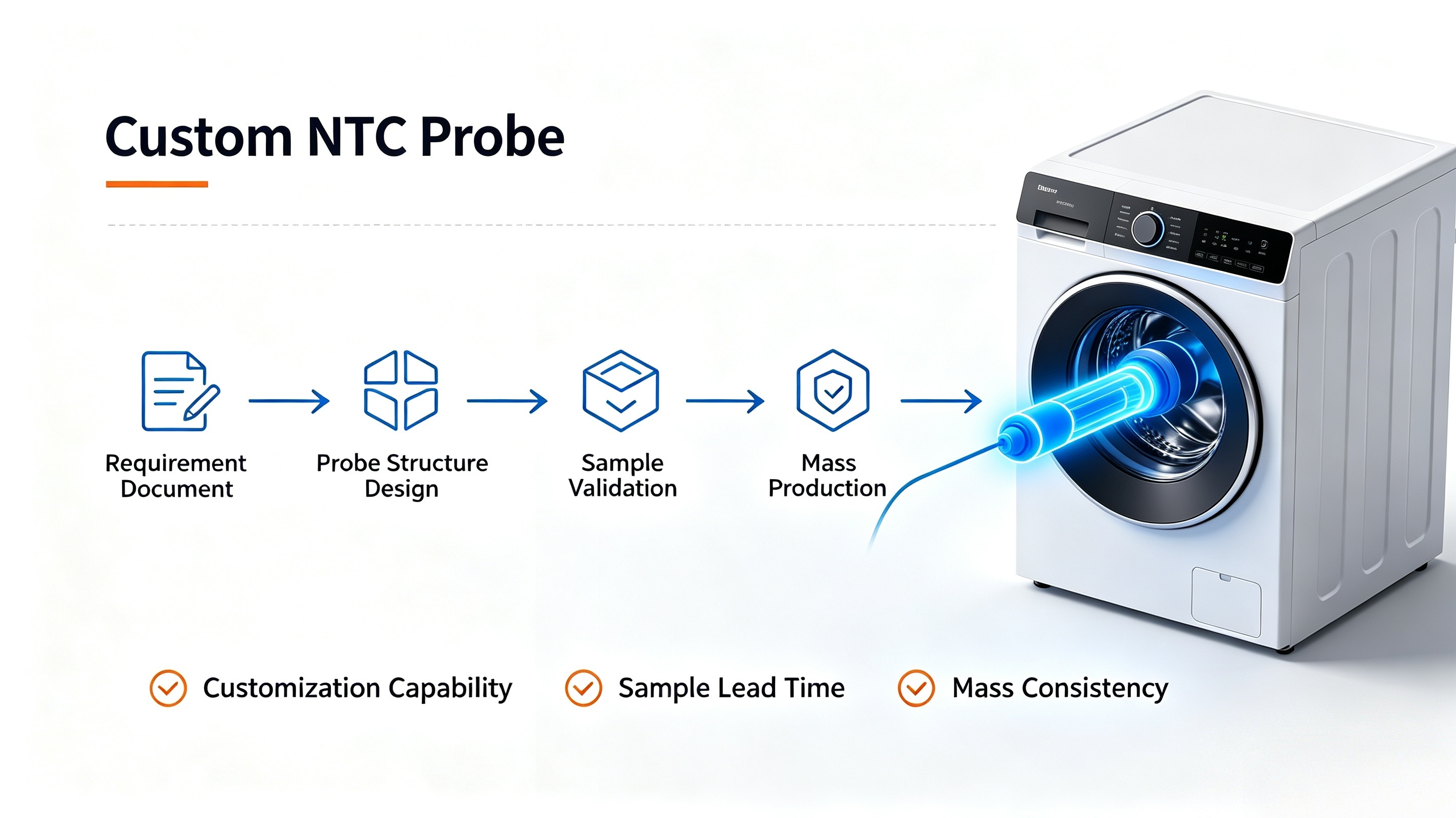
Here’s the harsh reality: outdoor energy‑storage sites are brutal environments. Sensors face endless high‑low temperature cycling, heavy humidity, dew condensation and constant vibration. These tough conditions don’t break sensors overnight. Instead, they slowly trigger parameter drift, unstable readings and intermittent failures. The result? Your systems work perfectly in the lab but act unpredictable after months of field operation. Worse, field repairs for distributed energy‑storage stations are ridiculously costly. A tiny sensor fault can trigger site visits, manpower costs, equipment downtime and even project compensation fees. Saving a few cents on sensors upfront ends up costing thousands afterward.
Most field failures are not caused by bad NTC chips. 90% of sensor reliability issues come from poor packaging and structural design. Many generic sensors use basic dispensing, low‑grade epoxy and weak terminal structures that work fine for indoor consumer devices but cannot survive harsh outdoor energy‑storage scenarios.
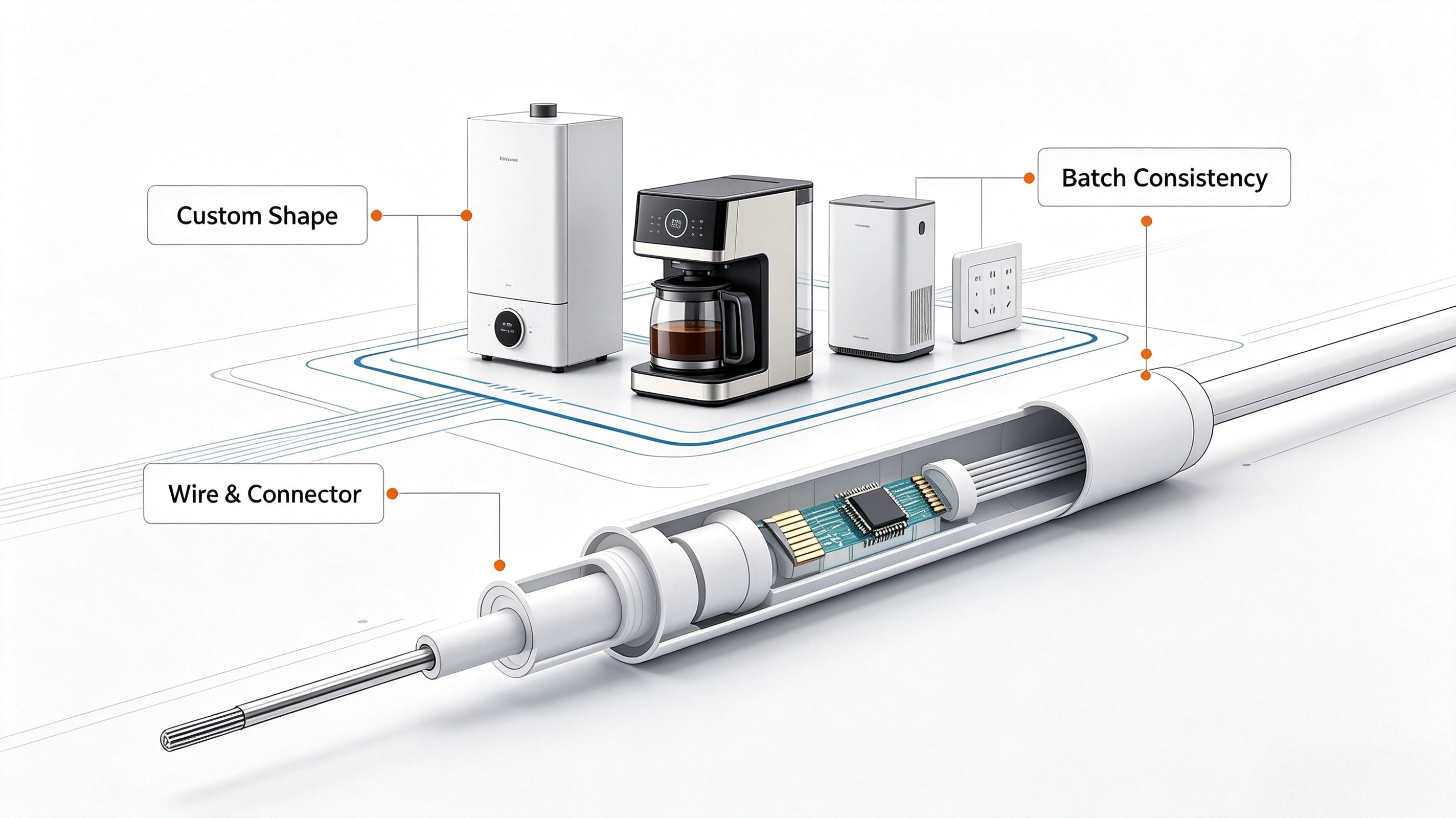
Let’s break it down simply. Encapsulation is the sensor’s “protective coat”. Cheap sensors only glue key joints partially, leaving tiny gaps for moisture to sneak in. Over repeated temperature cycling, moisture erodes internal solder points, causes resistance drift and eventually kills the sensor entirely. In contrast, full potting encapsulation fully fills the probe interior with high‑durability epoxy, forming a solid waterproof and thermal‑shock resistant barrier. It is not fancy technology — it is the basic reliability guarantee that outdoor energy storage absolutely needs.
Terminal structure is another easily ignored failure point. Energy‑storage devices vibrate during transportation, installation and daily operation. Weak terminal crimping and zero strain relief create hidden mechanical stress. Over time, wires loosen, signals cut off randomly, and field failure rates keep climbing. A reinforced, anti‑vibration terminal design may look trivial on the drawing board, but it is the key to long‑term stable operation for outdoor sensors.
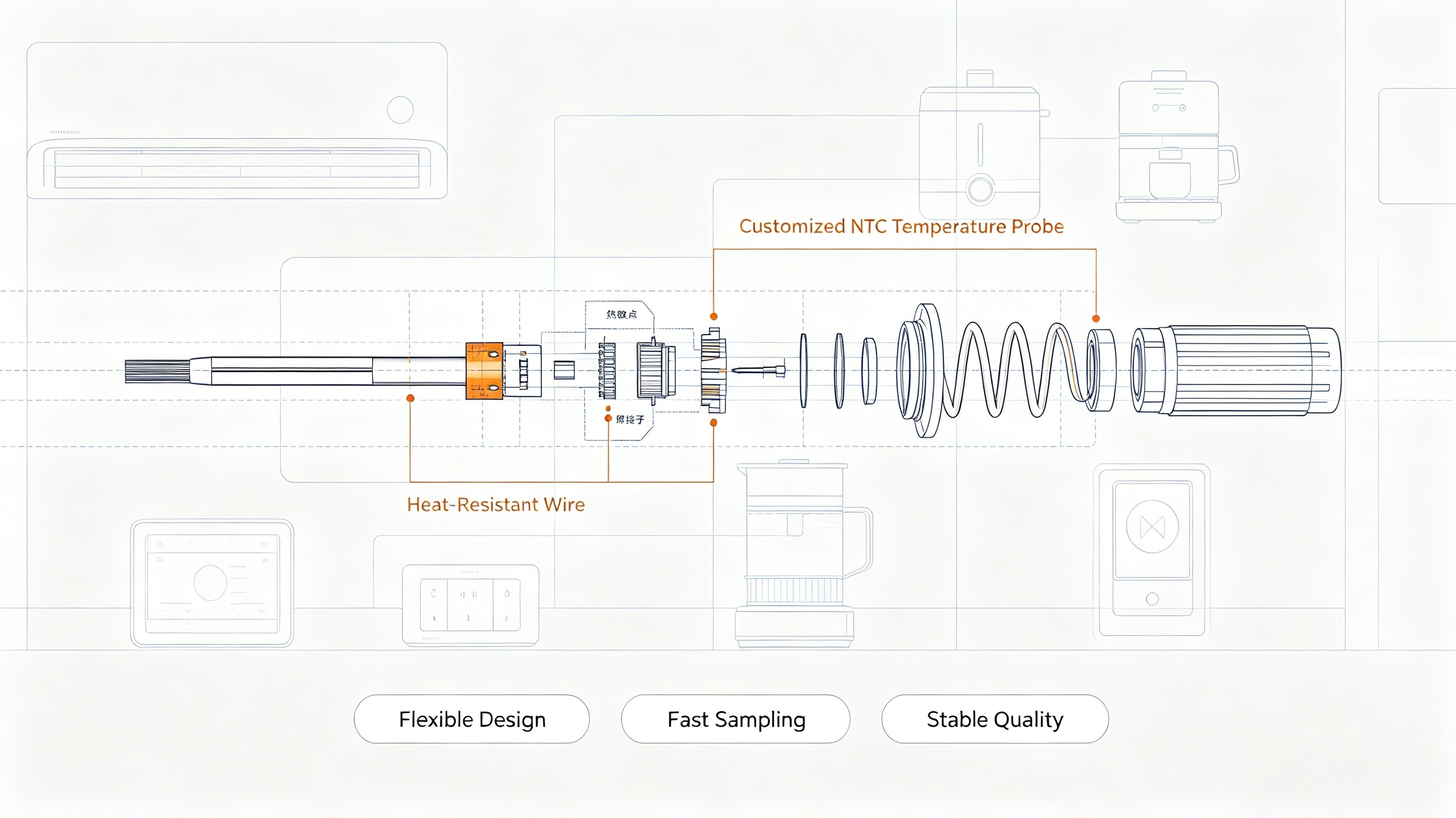
The best way to cut field failures is simple: stop fixing problems after they happen, and eliminate risks at the source. Instead of purchasing general‑purpose sensors and crossing your fingers for luck, energy‑storage OEMs need scenario‑optimized sensors tailor‑built for outdoor high‑humidity and temperature‑cycling environments.
This is exactly where JPTE makes a difference. We don’t offer one‑size‑fits‑all generic NTC sensors. We customize every probe specifically for energy‑storage field conditions.
For harsh outdoor projects, we adopt full epoxy potting technology to block moisture and condensation penetration completely. Our reinforced terminal structure and professional strain‑relief design effectively absorb vibration and mechanical pulling force, preventing loose connections and signal dropout. Before mass production, every customized probe undergoes strict temperature cycling, damp‑heat ageing and vibration testing to simulate real‑world field fatigue.
At the end of the day, energy‑storage reliability is built on every tiny component. Choosing cost‑effective but field‑ready NTC sensors is the smartest way to slash after‑sales costs, stabilize system operation and protect your brand reputation.
If you are tired of mysterious field sensor failures and high maintenance costs, connect with JPTE’s engineering team today. We provide customized high‑reliability NTC sensor solutions built exclusively for your energy‑storage scenarios.
Contact our application engineers, or download our datasheets.
Whatsapp:+8618575186186
E-mail:ft002@ipet.cn
Youtube:JEPT-Yuna
Ins:jept yuna
Facebook:Jept Yuna